Clinical trial: a multicentre, randomized, double-blind, placebo-controlled, dose-finding, phase II study of interferon-beta-1a in moderately active ulcerative colitis..Pena-Rossi C, Schreiber S, Golubovic G, Mertz-Nielsen A, Panes J, Rachmilewitz D, Shieh MJ, Simanenkov VI, Stanton D, Graffner H. Aliment Pharmacol Ther. 2008 Jun 21. [Epub ahead of print]
Background Ulcerative colitis (UC) pathophysiology is characterized by an imbalance between pro- and anti-inflammatory cytokines. Interferon (IFN)-beta-1a has potent immunoregulatory properties, including stimulation of host defence mechanisms, and thus represents a potential treatment.
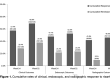
Aim To extend pilot data and identify a suitable dose of IFN-beta-1a to achieve ECR in patients with moderately active UC and to evaluate safety. Methods In this multicentre, double-blind, placebo-controlled trial, adults with moderately active UC were randomized to IFN-beta-1a 44 or 66 mcg, or placebo, subcutaneously three times weekly for 8 weeks, with a 4-week follow up. Results ECR was observed in 23.4% (95% confidence interval [CI]: 13.8-35.7) of placebo patients, 29.2% (95% CI: 18.6-41.8) of the IFN-beta-1a 44 mcg group and 20.0% (95% CI: 11.1-31.8) of the 66 mcg group (P = 0.45). Improvements with IFN-beta-1a 44 mcg were greater than with placebo for most secondary efficacy outcomes, although significance was not achieved. Placebo response rates were higher than expected from previous trials. Adverse events were similar to the known safety profile of IFN treatment. Conclusions IFN-beta-1a was generally well tolerated at the doses tested, but a significant therapeutic benefit in patients with UC was not observed.
Leggi l’articolo